
Single Phase Versus Three Phase Power Explained

A new induction cooktop, ducted air conditioning or workshop machine can turn a simple electrical job into a bigger question: is your existing supply up to it? The single phase versus three phase decision is not about choosing the ‘best’ power. It is about matching the supply to the way your home or business actually uses electricity.
For many homes across Fremantle, Cockburn, Melville and Perth’s southern suburbs, single phase power is perfectly suitable. For a growing household, a major renovation, a busy commercial site or machinery with high starting loads, three phase may be the sensible option. Knowing the difference early can prevent delays, avoid unnecessary expense and help you plan a safer installation.
Single phase versus three phase: the practical difference
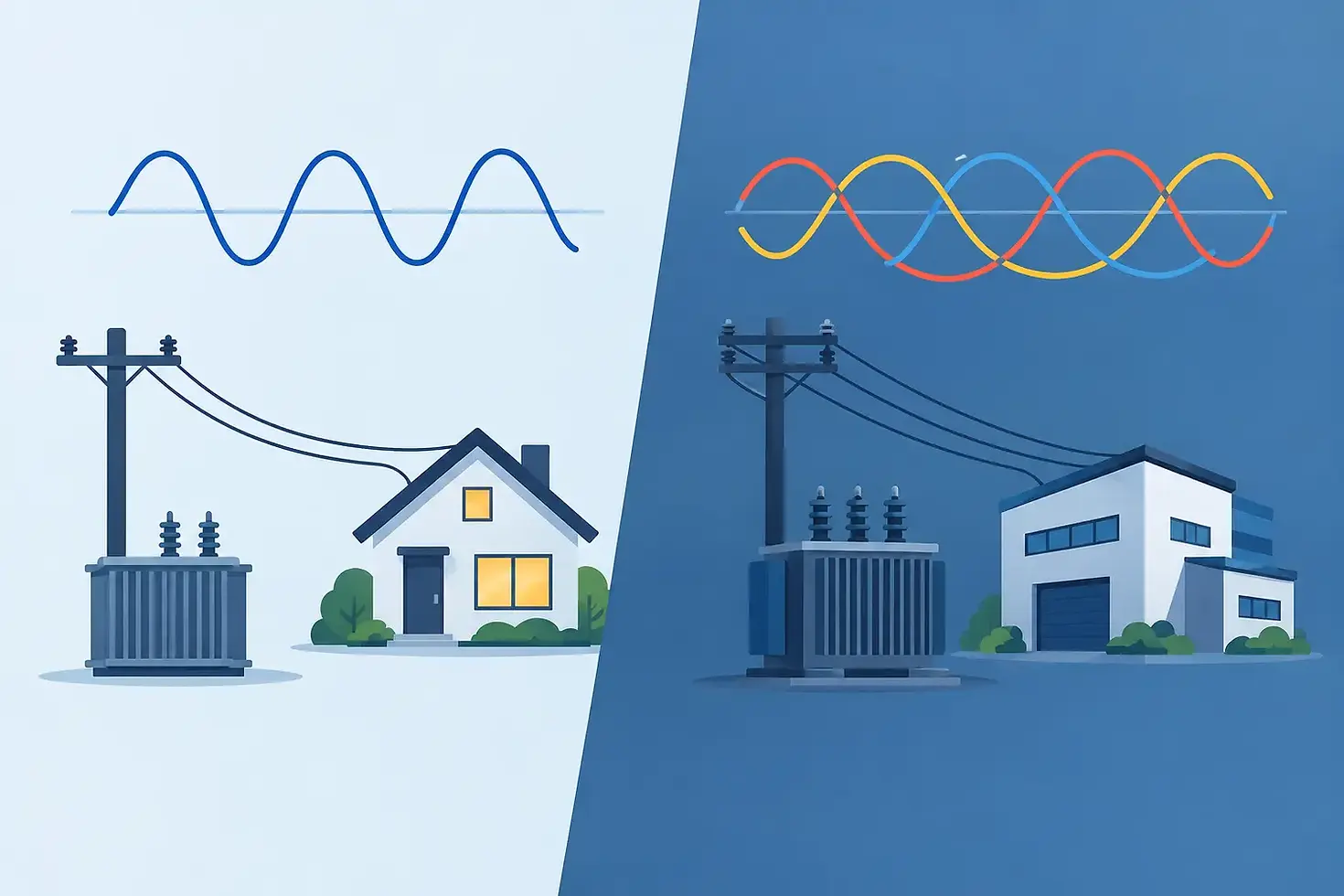
Single phase power is the standard supply to many established homes. It delivers electricity through one active wire, along with a neutral and earth. In Australia, it is commonly referred to as 230V supply, although you may still hear people call it 240V. Your lights, general power points and most everyday appliances operate comfortably on this type of supply.
Three phase power uses three active wires, each carrying power at a different point in its cycle. It can supply standard single phase circuits as well as equipment designed for three phase operation. The higher voltage available between phases is commonly described as 400V, or 415V in older terminology.
The key benefit is not that three phase makes every appliance more powerful. It spreads electrical demand across three phases. That gives a property more capacity to run several large loads without placing the whole burden on one phase.
Think of a single phase supply as one lane carrying all the traffic into a property. It works well until several heavy vehicles arrive at once. Three phase provides additional lanes, allowing demand to be distributed more evenly. The wiring, switchboard and protection devices still need to be correctly designed, but the available capacity is greater.
When single phase is enough
A typical household with lighting, power points, a refrigerator, television, washing machine and conventional cooking appliances will often be well served by single phase power. Even a number of larger electrical additions can be possible, depending on the supply capacity and how the circuits are arranged.
Modern homes do need more power than many older homes were designed for. Reverse-cycle air conditioning, electric ovens, pool equipment, EV chargers and induction cooktops can add substantial demand. That does not automatically mean you need three phase. An electrician should first look at the existing main switch rating, consumer mains, meter panel, switchboard condition and the likely maximum demand of the property.
For example, a family may be able to run an electric oven and a modest air conditioner on single phase without trouble. Add a high-capacity EV charger, large ducted system and pool heater, and the calculation changes. It is the combination of equipment, rather than one appliance in isolation, that matters.
Load management can also be an option. Some EV chargers can reduce their output when the household is using more electricity. Timers and smart controls may prevent large appliances from operating together. These solutions can be practical where a supply upgrade is not immediately required, but they should be selected for the property rather than used as a shortcut around an overloaded installation.
When three phase power makes sense
Three phase is often found in commercial buildings, workshops, strata sites and newer or larger homes. It is particularly useful where equipment has a high electrical demand, where several loads operate at the same time, or where the equipment manufacturer specifies a three phase connection.
Common reasons to consider it include larger ducted air conditioning systems, substantial electric cooking loads, high-output EV charging, welders, compressors, pumps, hoists and commercial refrigeration. It can also be appropriate for a home with extensive electrical upgrades planned over time, especially if the switchboard and supply are already being replaced.
Motors are a major example. A three phase motor generally starts and runs more smoothly than a comparable single phase motor. For a workshop or commercial operation, this can make a meaningful difference to reliability and performance. A machine designed for three phase should not be connected to a single phase supply with an improvised workaround.
Businesses should also think beyond the equipment they have today. A café, small warehouse, salon or office may start with modest demand, then add refrigeration, cooking equipment, additional workstations, air conditioning or production machinery. Planning sufficient supply capacity during a fit-out can be far more cost-effective than reopening walls and reworking the electrical installation later.
Three phase is not automatically the better choice
It is easy to assume three phase is a future-proof answer for every property. Sometimes it is. Sometimes it adds cost without providing a real benefit.
A three phase upgrade may involve work at the meter panel, new consumer mains, a switchboard upgrade, metering changes and coordination with the electricity network. The network must confirm whether three phase supply is available and what works are required at the street or point of connection. Site conditions, cable routes and the age of the property can all affect the final scope.
There is also a practical design consideration: loads need to be balanced as reasonably as possible across the phases. That is part of a proper installation, not something a homeowner should need to work out. An electrician assesses the circuits and plans their distribution so one phase is not consistently carrying far more demand than the others.
For a small home with no major new loads planned, upgrading purely because three phase sounds superior may not be worthwhile. A sound single phase installation with adequate circuits, good protection and a modern switchboard is often the right result.
What an electrician checks before recommending an upgrade
The answer should come from an inspection and load assessment, not guesswork. The visible switchboard is only one part of the picture. Supply cables, meter equipment, earthing, existing circuits and the electrical network connection all matter.
An electrician will ask what equipment you are installing, its rated demand, how often it will run and what else may be operating at the same time. For a renovation, the discussion should also cover future plans. If you expect to add solar battery storage, an EV charger, a pool or more air conditioning in the next few years, it is worth considering this while the project is being designed.
Older switchboards deserve particular attention. Ceramic fuses, limited circuit capacity, ageing cabling or missing safety switches can affect both safety and upgrade options. A supply upgrade is often a good opportunity to bring the switchboard arrangement up to current requirements, with suitable circuit protection and clear labelling.
For commercial premises, a site assessment should include operating hours and critical equipment. A business that cannot afford refrigeration, security systems or network equipment to be offline may need dedicated circuits, backup considerations or staged works to reduce disruption. The cheapest initial approach is not always the least costly when downtime is included.
Solar, batteries and EV charging
Solar panels do not automatically require three phase power. A single phase home can have a solar system, and many Perth households do. However, the proposed inverter size, export arrangements and the existing supply can influence the design.
Three phase properties can use three phase inverters and distribute generation across phases, but this is not a universal requirement. Battery systems and EV chargers also come in single and three phase options. The right choice depends on the equipment, your usage patterns and the capacity available at the property.
If an EV charger is your main reason for considering an upgrade, look at charging needs honestly. Overnight charging at a moderate rate may suit single phase very well. A faster three phase charger can be valuable for high daily driving distances or fleet vehicles, provided the vehicle, charger and supply all support it.
Get the decision right before work starts
Electrical supply is not a one-size-fits-all choice. Single phase can be more than adequate for a well-planned home, while three phase can give a household or business the capacity needed for serious electrical demand. The right answer comes from the loads you have, the upgrades you are planning and the condition of the existing installation.
Before committing to a new cooktop, air conditioner, charger or piece of machinery, arrange a proper assessment. General Power can look at the practical requirements at your property and provide a clear quote for the work required. A little planning now helps keep your power reliable when you need it most.


Comments